Everything about L1 copyright For Indian Nationals
Table of ContentsWhat Does L1 copyright For Indian Nationals Mean?A Biased View of L1 copyright For Indian NationalsSome Known Questions About L1 copyright For Indian Nationals.The Only Guide to L1 copyright For Indian NationalsOur L1 copyright For Indian Nationals IdeasThe Single Strategy To Use For L1 copyright For Indian NationalsFascination About L1 copyright For Indian Nationals
US copyright classification An L-1 copyright is a copyright file utilized to enter the United States for the function of operate in L-1 status. It is a non-immigrant copyright, and stands for a reasonably brief quantity of time, from three months (for Iran nationals) to five years (India, Japan, Germany), based on a reciprocity timetable.L-1 visas are available to workers of an international business with workplaces in both the USA and abroad. The copyright enables such foreign workers to relocate to the firm's US office after having functioned abroad for the company for a minimum of one continuous year within the previous 3 before admission in the United States.
One L-1 copyright can permit multiple workers access into the United States.
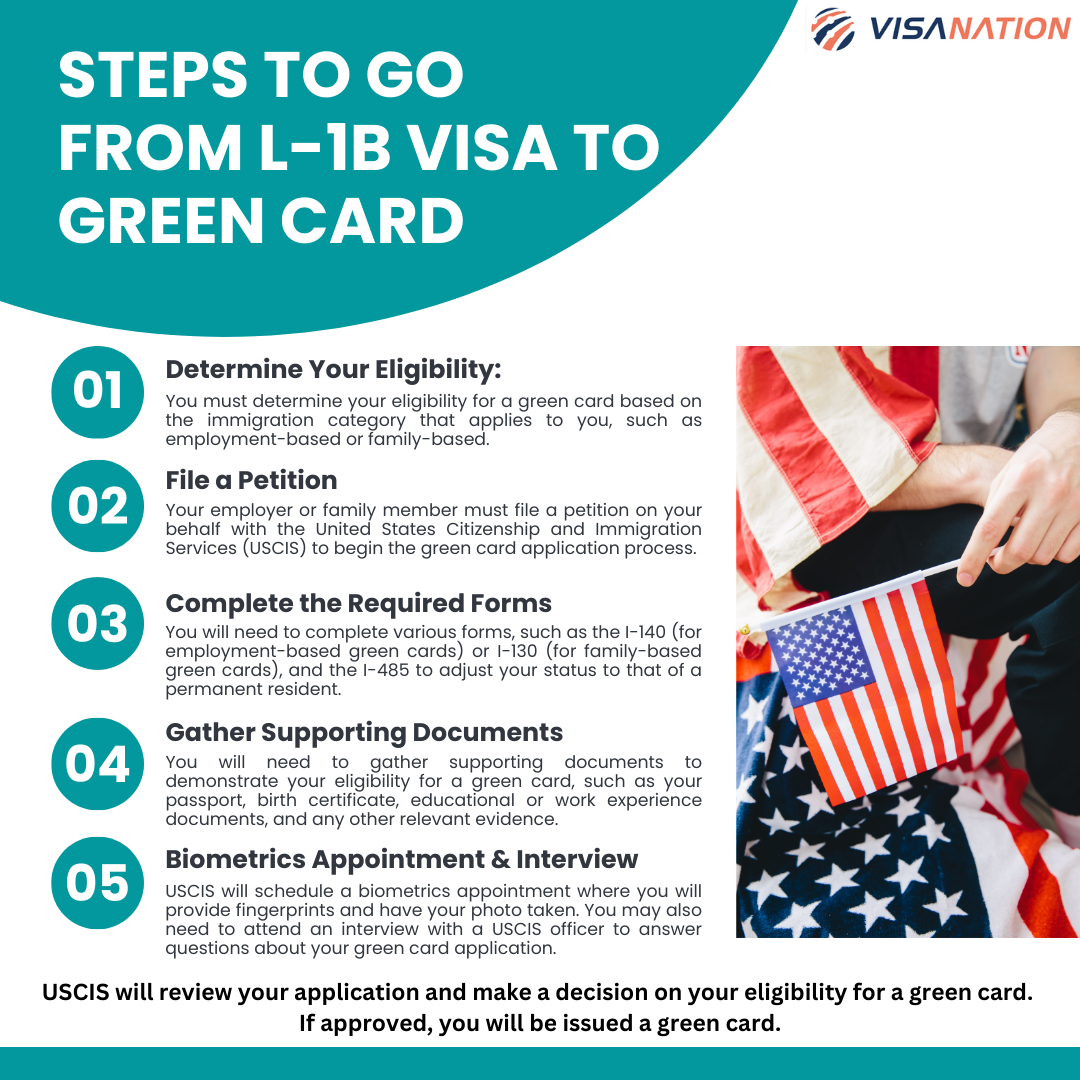
Excitement About L1 copyright For Indian Nationals
Congress developed the L-1 copyright in 1970. It was introduced as a "noncontroversial change" for multinational American companies. The original copyright needed that the work period match directly prior to obtaining the firm transfer. Congress originally did not define "specialized expertise". In 1980, the State Division issued 26,535 L-1 visas.
Significant Indian outsourcing firms such as Tata, Infosys, and Wipro increasingly made use of the L-1 copyright team American multinational companies. Fifty percent of Tata's workers brought to the USA came on L-1 visas. The North American Free Trade Contract had stipulations pertaining to intracompany transfers between the united state, Canada, and Mexico.
By 2000, Migration and National Service videotaped 294,658 copyright entrances - L1 copyright For Indian Nationals. In 2002, Congress allowed L-1 copyright partners, who get on an L-2 copyright, the consent to work easily within the USA. In 2003, the Senate Judiciary Board held a hearing on the L-1 copyright. In 2004, the variety of L-1B visas exceeded the variety of L-1A visas.
Candidates who are in the United States at the time of the declaring of the I-129 can request a change of condition from their present nonimmigrant standing (i.e. visitor, trainee, etc), as long as they are in condition at the time of the filing of the I-129. If they head out of status after the filing, yet before authorization, there is no adverse repercussion, and the individual does not build up unlawful existence.
How L1 copyright For Indian Nationals can Save You Time, Stress, and Money.
Children of the key L-1 can participate in college. The partner of the primary L-1 has an automated right to work in the United States.
An I-797 Notice of Action showing the authorization of the copyright request does not assure that a copyright will be provided at the United state

The Main Principles Of L1 copyright For Indian Nationals
For an L-1 copyright applicant, "twin Intent" is permitted: unlike some classes of non-immigrant visas (e.g., J-1 visas), L-1 candidates might not be refuted a copyright on the basis that they are an intending immigrant to the USA, visit homepage or that they do not have a home abroad which they do not intend to desert.
L-1 condition may be renewed and prolonged within the United States. Except when it comes to blanket petitions, a brand-new I-129 application have to be filed. Revival in the United States relates to standing only, not the actual copyright in the key. copyright revival, the applicant must most likely to an U.S

An individual in L-1 condition usually may work just for the requesting firm. If the L-1 worker goes into based upon an L-1 covering, nevertheless, it typically is feasible for the worker to be moved in the very same capacity to any other related business detailed on the blanket. The L-1 copyright program has actually been slammed for many factors.
In one instance, The united state Department of Labor fined Electronic devices for Imaging $3,500 for paying its L-1 copyright workers $1.21 an hour and working some of them as much as 122 hours a week. Some market reps have actually charged companies of using the L-1 program to replace U.S. employees. Critics and government authorities have explained just how the copyright program does not define "specialized knowledge" for foreign workers in the L-1B copyright classification.
Indicators on L1 copyright For Indian Nationals You Need To Know
(PDF). (PDF). Very experienced migration in the united states in an age of globalization: An institutional and company approach (Order No.
(PDF). (PDF). DHS Workplace of the Assessor General.
United click States Citizenship and Immigration Services. Obtained 22 August 2013. "When an alien was originally admitted to the United States in a specialized understanding capability and is later advertised to a managerial or executive placement, he or she must have been used in the managerial or executive placement for at least six months to be eligible for the complete duration of keep of seven years.
The Buzz on L1 copyright For Indian Nationals
United State Division of State. Recovered 2023-02-08. Tamen, Joan Fleischer (August 10, 2013).
For this moment, the staff member has to have functioned as a supervisor, exec, or specialized skill employee. The L-1 copyright is divided into 2 classifications: L1A copyright: Permits executives, managers, and company owner to remain in the United States for approximately seven years. L1B copyright: Allows staff members with specialized knowledge to remain in the United States for approximately 5 years.
Both the company and the employees should fulfill the eligibility demands for the L1-B copyright. The requirements are important site listed here: The certifying employers need to meet the adhering to L1-B copyright needs: Qualifying Partnership with a foreign associate, firm, or branch that is appropriate. The employer presently has a company or might possess an organization in the United States.